
Banner Template

A Different Perspective on Leadership, Wellbeing and Performance

At our recent Female Networking event, we were delighted to welcome Shona Beats, Executive Coach, former COO of Headspace and board member at Lumenate and Wevana, for a fascinating talk exploring burnout, workplace wellbeing, nervous system regulation and the realities of working in high-performance environments.

The session covered everything from stress and anxiety through to leadership, AI and emotional intelligence, offering a refreshing perspective on what sustainable success in modern workplaces should actually look like.

Below are three of our biggest takeaways from the evening.
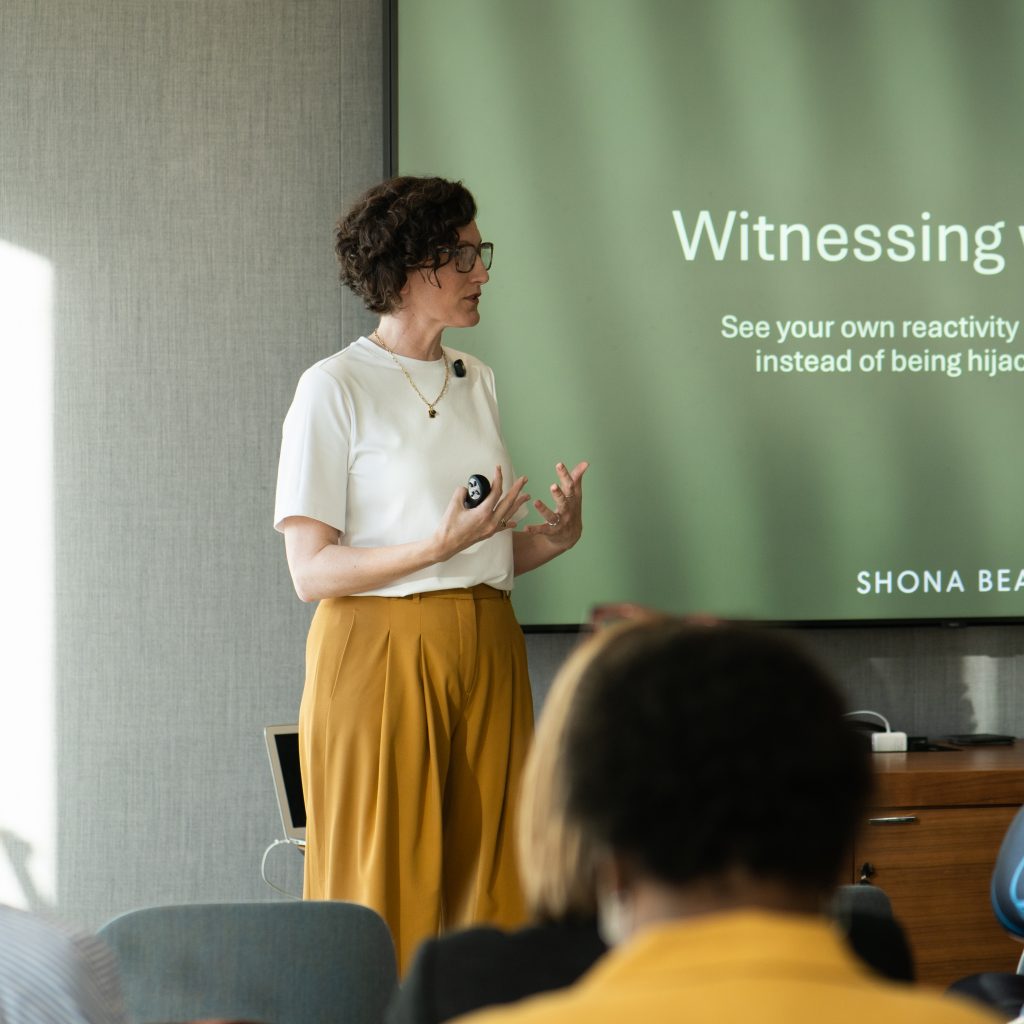
Sustainable Performance Requires Self-Awareness, Not Just Stamina

One of the strongest themes throughout the session was that resilience is often misunderstood within corporate environments.

In industries such as financial services, resilience can sometimes become associated with simply enduring pressure, working longer hours, constantly being available and pushing through stress. But sustainable performance is not just about stamina.

Shona explored how many workplace challenges are actually nervous system responses to prolonged stress and uncertainty, rather than simple productivity issues. Recognising personal triggers, understanding how we respond under pressure, learning how to regulate the nervous system and identifying early signs of burnout are all increasingly important skills in modern working life.

Workplace Wellbeing and Ambition Can Coexist

Another key takeaway was that conversations around wellbeing do not need to come at the expense of ambition or accountability.

The session highlighted the importance of creating environments where people can perform at a high level without operating in a constant state of stress. Topics such as psychological safety, communication and emotional regulation were discussed not as “soft skills”, but as genuine drivers of stronger leadership, better decision-making and healthier teams.

Particularly within fast-paced sectors, these conversations feel increasingly important.

The Human Side of Leadership May Become More Valuable in an AI World

There was also a particularly interesting discussion around AI and the future of leadership.

The conversation centred around the qualities technology cannot easily replace, emotional intelligence, empathy, communication, self-awareness and the ability to build trust within teams.

As AI continues to evolve, it was refreshing to hear a perspective that focused less on fear and more on the growing importance of human connection, thoughtful leadership and psychological safety within the workplace.

A huge thank you again to Shona for such an engaging and thought-provoking session. It was a valuable reminder that long-term success at work is not simply about output or endurance, but about creating healthier, more sustainable ways of working too.

Slide5

Passing on Wealth From Surplus Income: What You Need to Know

One of the most useful inheritance tax exemptions is often one of the least understood.

Section 21 of the Inheritance Tax Act 1984 allows people to make regular gifts from surplus income without those gifts being subject to inheritance tax. Unlike many other lifetime gifts, there is no need to survive seven years for the exemption to apply.

For families looking to pass on wealth gradually, this can be an extremely effective planning tool.

What is the exemption?

In simple terms, gifts will usually be exempt from inheritance tax if they:

  • Form part of a normal pattern of giving;
  • are made out of income rather than capital; and
  • do not affect the donor’s usual standard of living.

All three conditions must be met.

What counts as “normal expenditure”?

The gifts must be regular or intended to be regular.

This does not mean they have to be made every month or for the same amount, but there should be a clear pattern or intention behind them.

Common examples include:

  • paying school fees for grandchildren;
  • monthly gifts to children;
  • regular contributions to savings accounts; or
  • paying insurance premiums on behalf of another person.

A one-off payment is less likely to qualify unless there is evidence that it formed part of a wider gifting plan.

Gifts must come from income

The exemption only applies where the gifts are funded from income.

Income might include:

  • salary;
  • pension income;
  • rental income;
  • dividends; or
  • interest received.

Using savings or investment capital will usually prevent the exemption from applying.

HMRC will often look at the donor’s finances as a whole to decide whether the gifts genuinely came from surplus income.

Maintaining your standard of living

The donor must still be able to maintain their usual lifestyle after making the gifts.

If gifts are so large that the donor later needs to rely on savings to meet day-to-day living costs, HMRC may argue that the exemption does not apply.

The key point is that the gifts should come from income that is genuinely surplus to requirements.

Why Section 21 is valuable

The exemption is particularly attractive because:

  • there is no financial limit;
  • gifts are exempt immediately; and
  • there is no seven-year survival requirement.

For individuals with excess income, this can significantly reduce the value of their estate over time.

Example

Mrs Green receives pension and investment income of £120,000 each year. Her annual living costs are around £70,000.

She decides to pay £20,000 each year towards her grandchildren’s school fees.

Provided the payments are made regularly and documented properly, the gifts are likely to fall within the Section 21 exemption because they are made out of surplus income and do not reduce her standard of living.

Good record keeping matters

Claims under Section 21 are often reviewed by HMRC after death, sometimes many years later. Clear records are therefore essential.

It is sensible to keep:

  • details of income received;
  • records of regular expenditure;
  • bank statements;
  • evidence of gifts made; and
  • a written note confirming the intention to make regular gifts.

A simple annual summary of income, expenditure and gifts can be very helpful for executors.

Final thoughts

Section 21 is one of the most effective inheritance tax reliefs available, but it is frequently overlooked.

Used correctly, it allows wealth to be passed down efficiently during lifetime without triggering inheritance tax concerns.

As with most tax planning, careful structuring and good records are essential.